Carol Tavris

Carol Tavris
Author • Narratorb. 17 Sep 1944- Books
- 6
- Followers
- 0
About
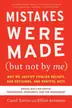
Carol Tavris is a social psychologist, writer, and lecturer whose goal is to promote psychological science and critical thinking in improving our lives. She is coauthor, with Elliot Aronson, of "Mistakes Were Made (But Not by ME): Why we justify foolish beliefs, bad decisions, and hurtful acts."
Her other major books include the landmark "Anger: The misunderstood emotion," a book well known for its critical look at unvalidated notions about the inevitability of anger and the need to "ventilate" it, and how anger can best be expressed constructively.
She is also author of the award-winning "The Mismeasure of Woman: Why women are not the better sex, the inferior sex, or the opposite sex," and coauthor of two widely used textbooks for introductory psychology.
She has written hundreds of essays and book reviews on topics in psychological science, and is a highly regarded lecturer who has spoken to groups around the world, from New Zealand to Finland.
She is a Fellow of the American Psychological Association and a Charter Fellow of the Association for Psychological Science and a member of the editorial board of the APS journal "Psychological Science in the Public Interest."
Top genres
Self-Help & Psychology Education Non-Fiction Science Psychology
Also known as
Featured works



Series


Authors in the same genres
H


A
E

T
P
N
A
G
Frequently asked questions
Carol Tavris is widely recognized for her work in social psychology, particularly for challenging conventional wisdom about emotions like anger and for promoting critical thinking in psychological science. Her collaborations with Elliot Aronson on cognitive dissonance and self-justification are also highly influential.
Carol Tavris frequently collaborates with other academics and writers. Notably, she co-authored "Mistakes Were Made (But Not by Me)" with Elliot Aronson, and she has also co-authored psychology textbooks.
Carol Tavris's writing is characterized by its clear, accessible, and often witty approach to complex psychological concepts. She emphasizes evidence-based reasoning and encourages readers to critically evaluate popular psychological theories.