A. E. van Vogt
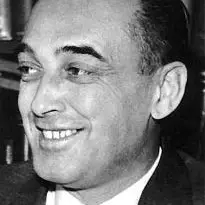
A. E. van Vogt
26 April 1912 – 26 January 2000 · From Canada, citizen of United States- Books
- 57
- Followers
- 0
About
Alfred Elton van Vogt was born on a farm in Edenburg, a Russian Mennonite community east of Gretna, Manitoba. Early in his career he wrote for true confession pulp magazines like True Story, but in the late 1930s he began writing science fiction, which he was more interested in.
His first published SF story, "Black Destroyer" was published in 1939, and is considered to be one of the first works of the Golden Age of science fiction. In 1941 he left his job at the Department of National Defence to become a full-time writer, and he went on to write a large number of short stories.
In 1944 he moved to Hollywood, California. In the 1950s he briefly became involved in L. Ron Hubbard's Dianetics projects. Although he left Dianetics, he claimed that Hubbard's followers continued to harass him, and he stopped writing for a few years.
In the 1960s Frederik Pohl convinced him to start writing again, and he wrote novels (as opposed to short stories that were later developed into novels) until his death in 2000.
Top genres
Science Fiction Fiction Space Opera Short Stories Essays
Also known as
Links
Featured works
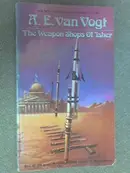


Series


Authors in the same genres


Frequently asked questions
A. E. van Vogt is widely recognized as a foundational author of the Golden Age of Science Fiction, particularly for his intricate plots and the development of the 'fix-up' novel, where he combined previously published short stories into a cohesive novel.
The 'Weapon Shops' series, including "The Weapon Shops of Isher" and "The Weapon Makers," explores themes of individual liberty versus state power. His 'Slan' novel is also a standalone work that has had a significant cultural impact.
While A. E. van Vogt's stories have been influential in science fiction, there are no major film or television adaptations of his works.
Yes. The Science Fiction Writers of America named him its 14th Grand Master (the Damon Knight Memorial Grand Master Award), announced in 1995 and presented in 1996. He was also inducted into the Science Fiction and Fantasy Hall of Fame in its inaugural 1996 class.